


“If it hadn’t been for the Ayrshire Hospice, we would have been lost.”
The Hyslop Family
This spring, we’re sharing Alan Hyslop’s story – one of love, loss and the difference hospice care can make.
It has been ten years since Alan died in the Ayrshire Hospice’s In-Patient Unit on 30 January 2016, aged 41, after living with Motor Neurone Disease for two years. A devoted son and brother, Alan was an incredibly popular and well-known figure around Lendalfoot, Colmonell and Girvan. Through the family business as agricultural contractors and shed builders, Alan worked on farms across Ayrshire combining crops and erecting new sheds.
A massive football fan, Alan played regularly until his diagnosis. On the day he died, Alan heard his team had scored a late winner that afternoon – bringing one last smile to his face before he died peacefully.
After losing a son, brother and brother-in-law, the family have continued to support the Ayrshire Hospice to show their gratitude for the care and support Alan received while he was a patient.
Alan’s parents, Elizabeth and Lindsay, along with his sister Lynne and her husband Scott, wanted to share their experience of how the Hospice supported them all during that time.
Every donation to our Spring Appeal helps ensure more families like the Hyslops receive that same care and support — whether at home, in the Hospice, or through bereavement services.
Providing that care takes significant resources. It now costs £10.2 million each year to deliver all of the Ayrshire Hospice’s services across Ayrshire and Arran.
Will you support our care this spring – and help us be there for every family who needs us?

The Hyslop Family story – in their own words
“You have these preconceived notions based on what you think a hospice is. You imagine it’s only where people come to die, that it’s depressing… but that was the thing that struck us most. It’s actually a very happy place.
It’s about providing care and support to the patient and their family during the most horrible of times, making them that little bit brighter. Sometimes it takes a really dark time for someone to shine a little light. That really opened our eyes to what a hospice does.
Alan was a “Mammy’s boy” – what boy isn’t! He loved life, and especially his football, which he played three times a week, and he also followed the Tartan Army.
He was a quieter character than his sister, but on the football field people always said he was a different person. He could still be a bit crabbit at times but he loved socialising.
Alan worked for his dad and brothers on the family farm and loved combining and digging. When he was about three years old, we bought him a miniature combine harvester, tractor and trailer, which he kept at the bottom of the wardrobe in his bedroom.
When his dad brought his combine out of the shed for the season, Alan would bring his out of the wardrobe too and fill them with barley. When Lindsay put his combine away again, Alan would put his away too. Even from an early age, he loved combining and working on the digger.
That first autumn after he was diagnosed, when the combines started up again and he heard their unique sound, it broke his heart because he knew he wouldn’t be out there with them. He just couldn’t go back to the shed after that.

It was during 2013 that Alan fell while playing football and was badly injured. Around the same time, he began struggling at work too. When he tried to use the drill, it would spin out of his hand, and he started getting pulses in his arm which we thought was a trapped nerve in his back after the fall.
He went to a chiropractor he had seen before, who told him, “You need to see your GP.” Not long after that, Alan was hospitalised with appendicitis and received emergency surgery. He was then referred to a neurologist a few months later because the muscle around his hands had deteriorated and he wasn’t recovering as quickly as anticipated.
He had a scan, and afterwards our GP phoned and said we needed to come in. That was when they told us they were looking at Motor Neurone Disease. It was 27 March 2014 — a few weeks later, Mum retired to become his carer.
Our first involvement with the Hospice was with Helen from the Community Nursing team. She was brilliant with Alan. They clicked immediately, and he felt comfortable speaking with her in a way he didn’t with others. She couldn’t have done any more for us.
We knew eventually Alan would have to come to the Hospice’s In-Patient Unit (IPU), and Helen, along with Dr Killin, suggested bringing him in for a couple of weeks of respite to help manage his pain. It also gave us all the chance to get to know the IPU, see what it was like, and understand what to expect further down the line.
Helen also fought to get medication that would help manage Alan’s pain. Alan died three days after his sister Lynne’s birthday, but Helen had arranged a birthday card for her, signed with Alan’s fingerprint, which meant so much to her.

Alan also received complementary therapy and massage at home to help with his pain, and the family were offered support too. The Respite and Response team would visit Alan at home, giving us four hours one afternoon each week to go out and meet family, have lunch or afternoon tea, go shopping, or even get your hair done. You don’t think it’s much, but those four hours gave you a little bit of space to yourself. Knowing he was at home with someone who could help him gave us peace of mind and meant we weren’t constantly worrying when we were out.
In January 2016, Alan returned to the Hospice’s IPU for ten days. We were in a nice room off to the side of Alan’s, with a small area and a sofa bed so we could get some sleep. In Alan’s final few days, we were given another room next door with sofa bed where Lynne and Scott could stay too. Those little touches meant so much to us.
Those final days, being able to be together all the time in a comfortable space made things a little easier for us as a family. When Alan was in the hospice, we weren’t his carers – the staff took care of him.
We could just be together as mother and son, father and son, brother and sister one last time.

Towards the end, he developed a chest infection and we were asked if we wanted to send him to hospital for further treatment. But why would we do that? He wasn’t going to get better. In the hospice, either we were with him or a member of staff was.
He was lying in a bed, effectively trapped in his own body because he couldn’t use it, but his mind was still fully functioning. It’s heartbreaking for families going through the same thing. Having that space in the hospice where we could spend every minute of those final days together was vital. Whatever you needed, someone was always there. If you wanted a cup of tea or a snack to eat, they just couldn’t do enough for you.
We were offered counselling to help us and although we tried a session not long after Alan died, it just wasn’t the right time. We weren’t ready yet. It was four years later when we did, and the Hospice were still there to support us over the phone during the COVID-19 lockdown.
When Alan was first diagnosed, we were told that because he didn’t live in the central belt, he didn’t qualify for a lot of support. Until the Hospice came along, he probably missed out on things that might have helped him. That’s why having a local hospice is so important.”

The Ayrshire Hospice were essential to us at that time. We couldn’t have asked for any more when we needed them most.
The Hyslop Family
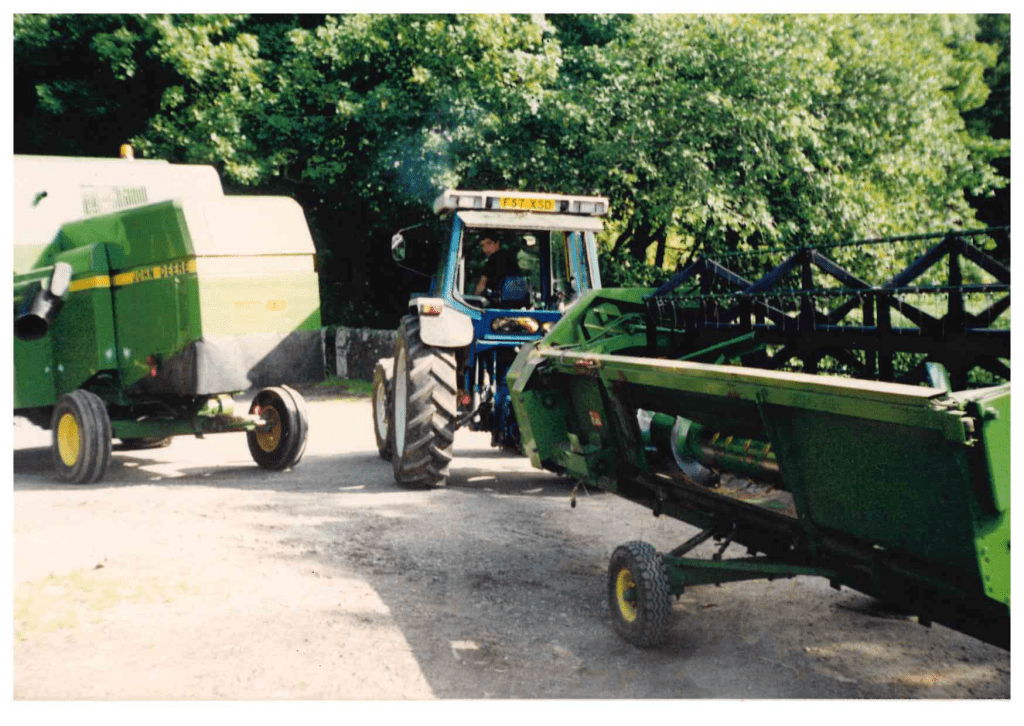 Alan in his tractor
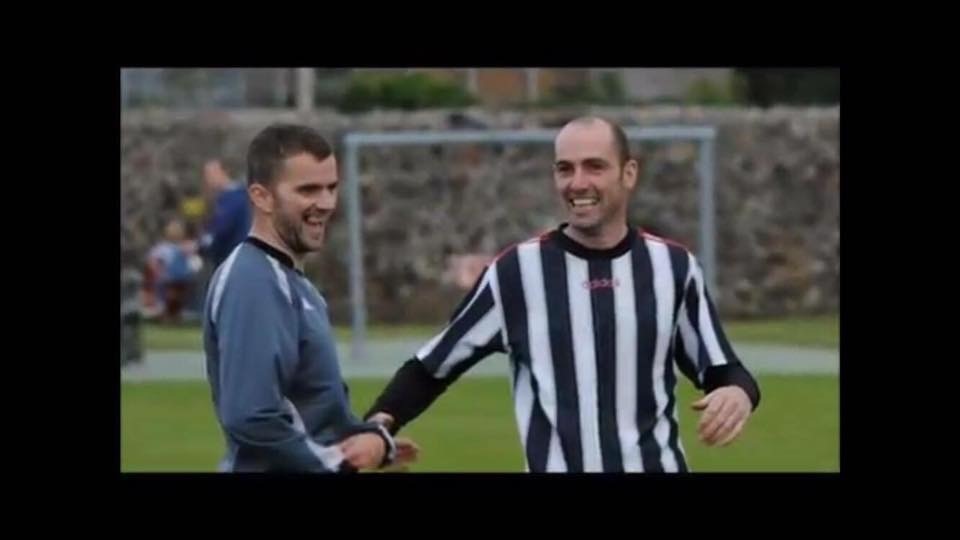 Alan (on right) playing for Ballantrae KA
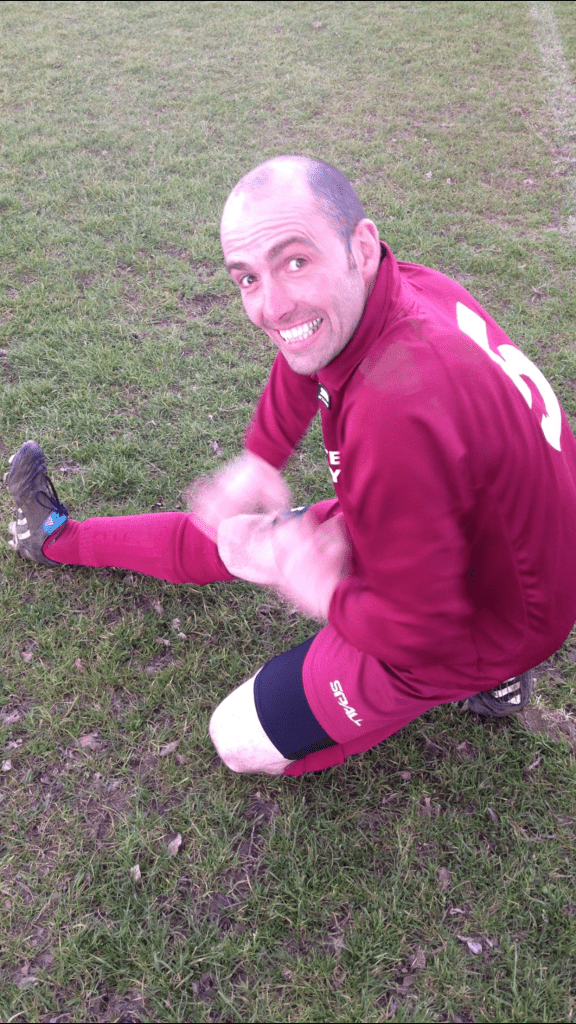 Alan playing for Vale of Girvan
 Alan’s toy tractor and trailer from his third birthday.
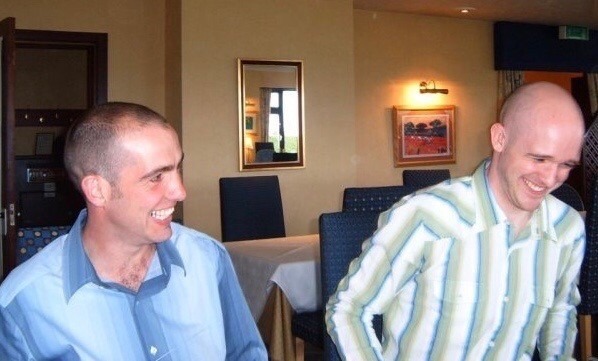 Alan with his brother-in-law, Scott.
 Alan on holiday


